
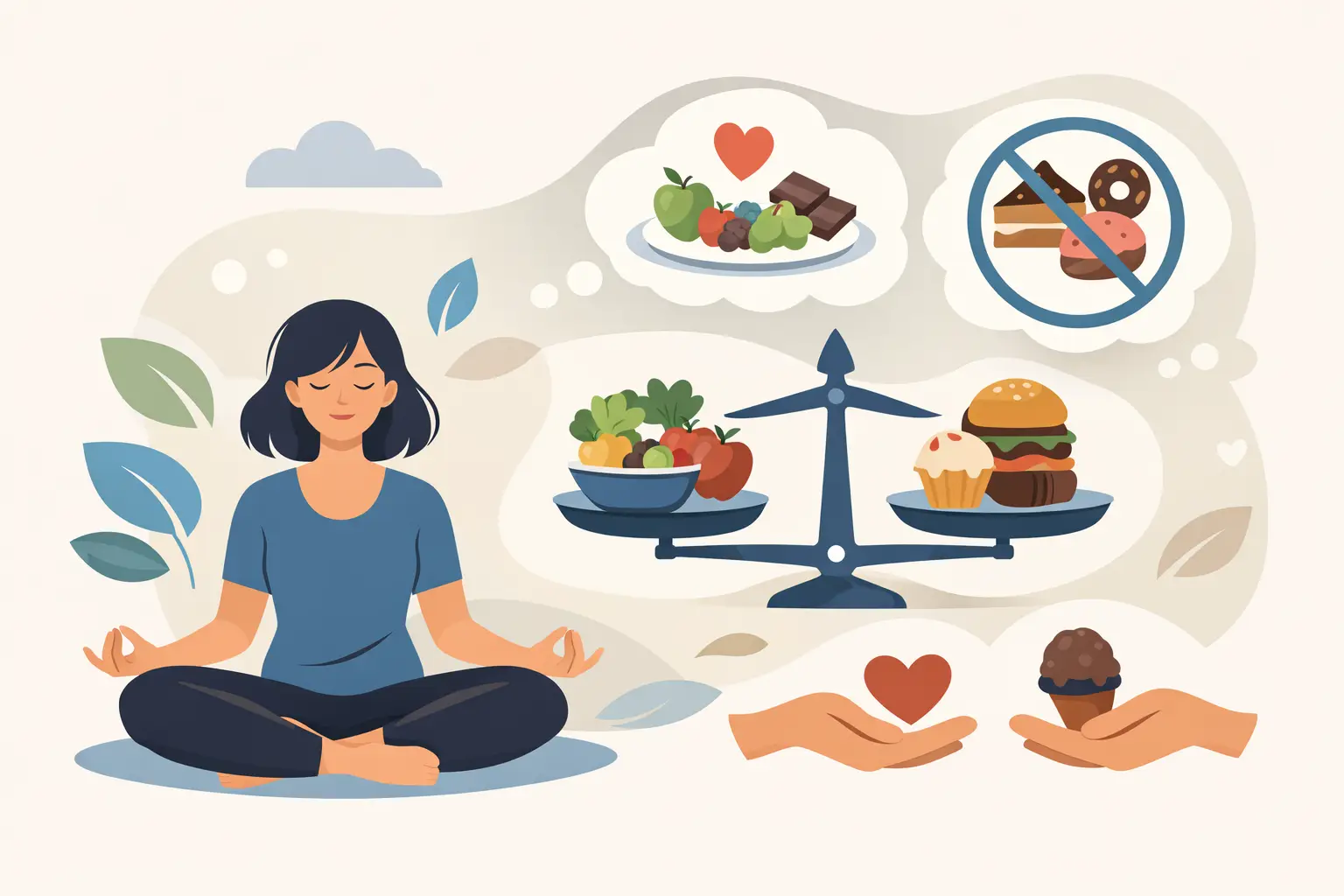
A bag of chips disappears while you answer emails. You promise yourself that tomorrow you will be stricter, skip dessert, or start over. Then hunger, stress, or a difficult day arrives, and the cycle repeats. If you searched for controlar ansiedad alimentaria, the goal is not to develop more willpower. It is to understand what your brain and body may be asking for before food becomes the only available relief.
Food anxiety can look different from person to person. For some, it is a powerful urge to eat at night. For others, it is constant thoughts about food, guilt after eating, or the feeling that certain foods are impossible to keep at home. These experiences are common, but they deserve attention, especially when they affect your mood, health, relationships, or ability to enjoy meals.
What food anxiety really means
Food anxiety is not a formal medical diagnosis by itself. It is a useful everyday term for eating that feels driven by tension, urgency, worry, or loss of control rather than physical hunger alone. It can involve emotional eating, strict food rules, binge-eating episodes, or anxiety around specific foods and body weight.
The distinction matters because hunger is not the enemy. Physical hunger is a normal body signal that tends to build gradually and can usually be satisfied by different foods. Anxiety-driven eating often feels more urgent and specific: “I need something sweet now” or “I cannot stop until this is gone.” It may show up after an argument, during loneliness, while working late, or after a day of not eating enough.
It is also possible to experience both at once. Someone who skips breakfast and eats a very light lunch may become biologically hungry by late afternoon. If that hunger arrives alongside stress, the urge to eat can feel overwhelming. Treating it only as an emotional problem misses part of the picture.
Why trying to control food anxiety with restriction often backfires
A common response is to create tighter rules: no carbs, no snacks, no eating after 7 p.m., or no “bad” foods in the house. Structure can help some people, but rigid restriction often intensifies preoccupation with food. When the body perceives deprivation, appetite, cravings, and the mental focus on food can increase.
The more a food is framed as forbidden, the more emotional weight it may carry. Then eating it can trigger guilt, which leads to more restriction and sets up the next episode. This does not mean every food should be eaten without thought. It means that sustainable eating habits work better when they rely on regular nourishment, flexibility, and realistic choices rather than punishment.
Sleep, stress, alcohol, and certain medications can also influence appetite and impulse control. Hormonal shifts, including those experienced during perimenopause, may affect sleep, mood, and hunger cues. There is rarely one single cause, which is why a curious approach is more useful than blaming yourself.
How to control food anxiety in the moment
The aim is not to force the urge away. Start by creating a small pause between the feeling and the action. Even two minutes can reduce the sense that you have no choice.
Name what is happening
Try a direct observation: “I feel anxious and I want to eat quickly,” or “I am very hungry after barely eating today.” Naming the experience helps separate you from it. You are having an urge, not failing a test.
Then rate your physical hunger from 0 to 10. A low number may point toward a need for comfort, rest, or emotional support. A high number is a sign that food is appropriate. If you are unsure, have a balanced snack and reassess after 10 to 15 minutes. Yogurt with fruit, toast with eggs, or an apple with peanut butter can offer more staying power than trying to wait out genuine hunger.
Make the next choice easier, not perfect
If you decide to eat, sit down if possible and put the food on a plate or in a bowl. This is not a rule meant to control portions. It is a way to help your brain register that you are eating, rather than eating automatically while scrolling, driving, or standing in the kitchen.
Before taking another serving, pause briefly. Ask whether the food still tastes good, whether your body feels more settled, and what would help you feel satisfied. Sometimes the answer is more food. Sometimes it is a glass of water, a change of environment, or permission to stop without throwing the rest away.
Use a short nervous-system reset
Food can be comforting, and it is not wrong to use it for comfort sometimes. But it helps to have other options that lower stress without requiring a major effort. Step outside for five minutes, take a warm shower, send a voice note to someone you trust, stretch, or breathe slowly with a longer exhale than inhale.
These strategies will not solve every craving. Their job is to widen your options. When eating is the only coping tool, anxiety has more power over the moment.
Build routines that reduce the intensity of urges
The most effective way to manage food anxiety is often decided hours before the craving arrives. Regular meals provide a steadier foundation for appetite, energy, and concentration. Many adults do well with three meals and one or two snacks, but the right rhythm depends on work schedules, activity level, medical needs, and personal appetite.
At meals, aim for a combination of protein, fiber-rich carbohydrates, healthy fats, and foods you genuinely enjoy. A lunch of grilled chicken, rice, beans, vegetables, and avocado may be more satisfying than a small salad that leaves you searching the pantry an hour later. Satisfaction is not an extra. It is part of what helps a meal feel complete.
It can also help to notice recurring patterns for one or two weeks. Keep the record simple: time, hunger level, emotions, what you ate, and how you felt afterward. This is not a calorie-tracking exercise. It is a way to identify useful information, such as late meetings that cause skipped meals, poor sleep before intense cravings, or a habit of eating while feeling isolated.
Change the language around food
Words can either calm or intensify food anxiety. Labels such as “clean,” “cheat meal,” and “bad food” can turn ordinary eating into a moral issue. Food choices have different nutritional value, but your worth does not change based on what you eat.
A more practical question is: “What choice supports me right now?” At times, that may be a home-cooked meal with vegetables and protein. At other times, it may be ordering takeout after an exhausting day and adding something nourishing when you can. Health is shaped by patterns over time, not by one cookie, one restaurant meal, or one difficult evening.
If certain foods trigger a loss-of-control feeling, complete avoidance may be useful temporarily for some people, particularly when there is a medical reason. But for many, gradual and planned exposure to those foods, ideally with professional support, reduces their power more effectively than an endless cycle of avoidance and overeating.
When food anxiety needs professional support
Consider speaking with a registered dietitian who works with eating behaviors, a therapist, or a physician if food anxiety is frequent, distressing, or worsening. Support is especially important if you experience binge eating, purging, fasting to compensate for eating, compulsive exercise, rapid weight changes, fainting, or intense fear around meals.
You do not need to wait until symptoms feel severe to ask for help. A qualified professional can screen for conditions such as binge-eating disorder, anxiety disorders, depression, or medical issues that affect appetite. They can also help you develop strategies that fit your culture, budget, family life, and health goals.
A calmer relationship with food is built through repetition, not one perfect day. The next time anxiety shows up around eating, respond with information rather than punishment. A regular meal, an honest pause, and support when needed can gradually make food feel less like a battle and more like one part of caring for yourself.
Deja una respuesta