
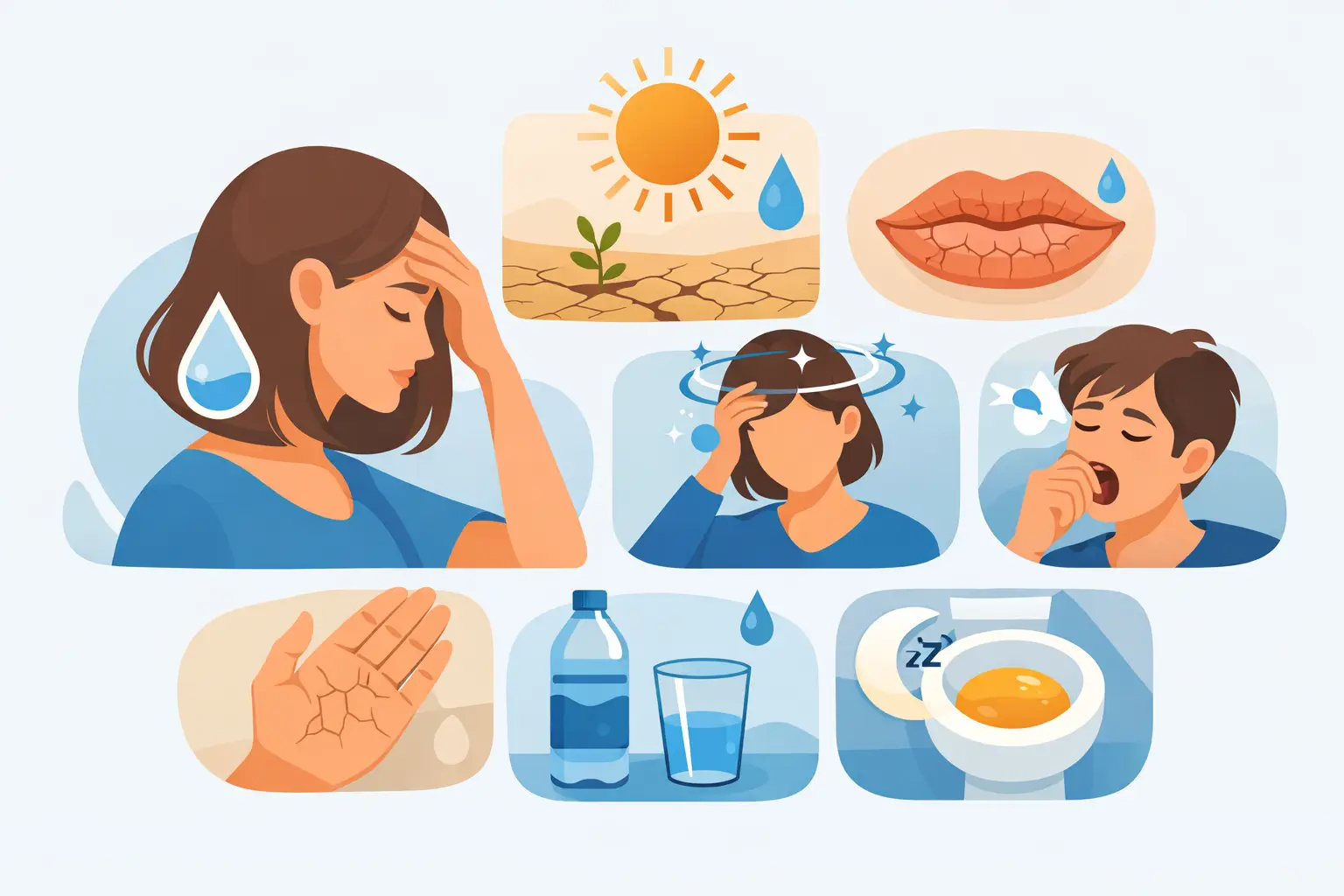
A dry mouth during a busy workday, an unusually hard workout, or a mild headache after hours in air conditioning may seem unrelated. Yet the senales de deshidratacion leve often begin this quietly, long before someone feels seriously ill. Mild dehydration is common, especially in hot climates, during exercise, after alcohol, or when daily routines make drinking fluids easy to forget.
The good news is that noticing it early can usually help you correct course with simple habits. The more useful question is not whether everyone needs to drink the same amount of water, but whether your body is getting enough fluid for your activity level, environment, meals, and health needs.
What mild dehydration actually means
Dehydration occurs when the body loses more fluid than it takes in. Water supports blood volume, temperature regulation, digestion, kidney function, and the transport of nutrients. Even a modest fluid deficit can affect how you feel and perform, although the effects vary widely from person to person.
Mild dehydration does not always mean you have gone a full day without water. It can develop after a sweaty walk, a night of poor sleep with a dry environment, several cups of coffee without other fluids, vomiting or diarrhea, or a fever. People who take certain medications, including diuretics, may also be more prone to fluid loss.
Thirst is helpful, but it is not the only signal. Some people do not notice thirst until they are already behind on fluids, while older adults may experience a weaker thirst response. Paying attention to a cluster of changes is more useful than relying on one symptom alone.
Señales de deshidratación leve to notice early
1. Thirst, dry mouth, or sticky lips
Thirst is the most familiar cue, but it can show up as a dry tongue, sticky saliva, chapped lips, or the feeling that your mouth never quite feels refreshed. This is particularly common after salty foods, alcohol, or long periods spent talking, traveling, or working in a dry room.
Dry mouth can also have other causes, including medications, mouth breathing, anxiety, and some medical conditions. If it is persistent despite normal fluid intake, it deserves a separate conversation with a clinician or dentist.
2. Darker urine and fewer bathroom trips
Urine color can offer a practical snapshot of hydration. Pale yellow usually suggests reasonable hydration, while urine that is consistently dark yellow or amber may mean you need more fluids. Going much less often than usual can point in the same direction.
This is not a perfect test. B vitamins can make urine bright yellow, and some foods and medications change its color. The goal is to observe the pattern over the day, not to chase completely clear urine. Constantly clear urine may mean you are drinking more than you need.
3. A mild headache or trouble concentrating
A headache after a long meeting, commute, or workout can have many explanations, but mild dehydration is one possibility. Some people also notice brain fog, irritability, reduced alertness, or difficulty focusing on routine tasks.
These symptoms are nonspecific. Low blood sugar, inadequate sleep, stress, eye strain, migraine, illness, and too much caffeine can feel similar. Still, if a headache appears alongside thirst and dark urine, drinking fluids and taking a short break is a sensible first step.
4. Lower energy than expected
When blood volume drops slightly, the heart may have to work harder to circulate blood. In daily life, this can feel like unexplained tiredness, sluggishness, or a workout that feels more difficult than it should.
This does not mean dehydration is always the reason for fatigue. Iron deficiency, depression, poor sleep, thyroid issues, infection, and under-fueling are also common causes. But hydration is one of the easiest variables to check before assuming the problem is more complicated.
5. Lightheadedness when standing up
Feeling briefly dizzy after standing can occur when blood pressure changes quickly. In some cases, inadequate fluid intake contributes, especially after heat exposure, sweating, diarrhea, or an intense training session.
Occasional mild lightheadedness may improve with rest and fluids. Repeated episodes, fainting, chest pain, a racing heartbeat, or dizziness that does not go away need prompt medical evaluation rather than another glass of water.
6. Muscle cramps or unusually heavy legs
Sweat contains both water and electrolytes, particularly sodium. During prolonged exercise or physically demanding work in the heat, fluid and sodium losses can contribute to cramps, weakness, or the sensation that your legs are unusually heavy.
Cramps are not a simple hydration test. Training load, muscle fatigue, medications, and medical conditions also play a role. For a short, low-intensity workout, water is usually enough. For exercise lasting more than an hour, or repeated heavy sweating in hot weather, a drink or snack containing sodium may be useful.
7. Constipation or harder stools
The large intestine absorbs water from stool. When fluid intake is low, stools can become drier and harder to pass. Constipation is also influenced by fiber intake, movement, medications, hormones, and gut conditions, so adding water without enough dietary fiber may not solve it.
A practical approach is to increase fluids gradually while eating fiber-rich foods such as beans, fruit, vegetables, oats, and whole grains. Sudden, severe constipation, blood in stool, or persistent abdominal pain should not be managed with hydration alone.
8. Reduced performance in heat
If a familiar walk, run, or gym session suddenly feels harder on a hot day, mild dehydration may be part of the picture. Sweating is essential for cooling the body, but when fluid losses accumulate, heart rate and perceived effort can rise.
This matters in the Caribbean, in humid climates, and for anyone who exercises outdoors. Humidity makes sweat less able to evaporate, so the body works harder to cool down. Planning fluids before activity is usually more effective than waiting until exhaustion sets in.
How to rehydrate without overthinking it
For most healthy adults, the first response to mild dehydration is simple: drink fluids consistently over the next few hours, rather than forcing a very large amount at once. Water is an excellent default, and milk, unsweetened tea, soups, and water-rich foods such as fruit and yogurt also contribute to hydration.
If you have been sweating heavily, have had vomiting or diarrhea, or have exercised for a long time in the heat, fluids containing electrolytes can help replace sodium as well as water. This does not automatically mean sports drinks are necessary for every workout. Many contain substantial added sugar, and for routine daily hydration, plain water and regular meals are generally sufficient.
A useful routine is to drink with meals, keep water visible at your desk or in your bag, and have fluids before, during, and after planned exercise. Add more on very hot days or when you are sweating more than usual. People with heart failure, kidney disease, liver disease, or prescribed fluid restrictions should follow individualized guidance from their health care team instead of increasing fluids on their own.
When mild symptoms may be something more serious
Seek urgent medical care for confusion, fainting, inability to keep fluids down, severe weakness, very little or no urination, rapid breathing, rapid heartbeat, or signs of heat illness such as hot skin and altered mental status. Infants, young children, older adults, and people with chronic health conditions can deteriorate faster and need a lower threshold for getting help.
If headaches, dizziness, fatigue, or dark urine recur despite reasonable hydration, do not assume the answer is simply to drink more. A clinician can help identify whether anemia, medication effects, diabetes, blood pressure changes, or another condition is contributing.
Your hydration needs will change from one day to the next. Learning to notice your own early cues, then responding with steady fluids, appropriate meals, and a little extra planning in the heat, is a small habit that can protect your energy and make daily movement feel better.
Deja una respuesta